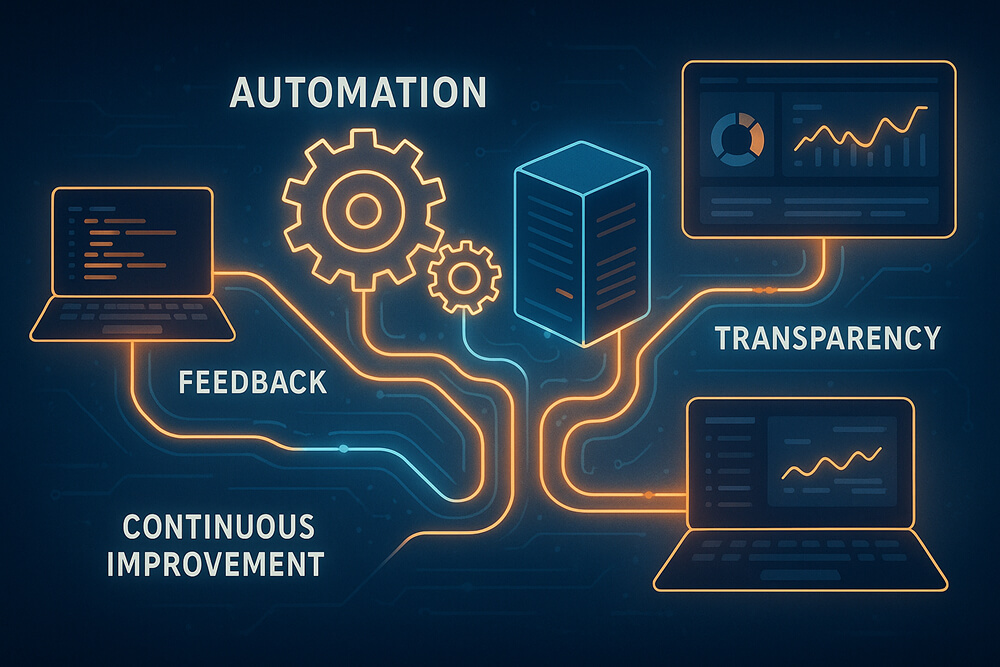
Software teams adopt new frameworks, cloud services, and delivery pipelines almost monthly, yet many engineers still stare at progress bars far longer than they write code.
Developer Productivity Engineering (DPE) treats that friction as an engineering problem rather than a personal failing. It breaks the end-to-end workflow into measurable parts, applies data science to find delays, and then uses automation, caching, and smart infrastructure to remove them.
The result is not “developers typing faster” but a system that lets ideas move from laptop to production without unnecessary stops.
Why Developer Productivity Matters
Software development is not only about coding but also about flow. Any extra wait time or repeated manual steps break that flow. For example, a minor interruption, such as having to wait for builds or tests, can make it much harder to focus and come up with new ideas.
Once the teams optimize these processes, they not only deliver at a higher speed but also increase their morale. Developers are more engaged when their tools work smoothly, and management gets visibility into where time and effort are actually spent.
The Core Principles of DPE Engineering
In order to construct an efficient DPE engineering plan, teams need to adhere to 5 fundamental principles:
- Measure what matters: Track impactful metrics such as build time, test stability, and CI/CD pipeline duration rather than simply counting commits or lines of code.
- Automate repetitive work: Building, testing, deploying, and monitoring should be automated to reduce human error.
- Shorten feedback loops: Developers get into a flow with quick feedback after every change.
- Create transparency: Turning performance metrics into a visual for the whole team makes it easier to spot bottlenecks at an early stage.
- Continuously improve: Managing productivity as an ongoing experiment rather than a one-time project is the right approach.
Common Productivity Challenges in Software Teams
Even with modern tools, most teams still face several recurring issues:
- Slow build and test cycles: Long waits during CI/CD can add hours to the development time.
- Tests that aren’t stable: Flaky tests make things unclear and waste time by causing pipelines to rerun.
- Tool fragmentation: When you use too many separate tools, you have to coordinate them by hand.
- Poor observability: Not being able to see pipelines makes it impossible to figure out what’s slowing things down.
- Switching between tasks: when developers move tasks, they lose focus and momentum.
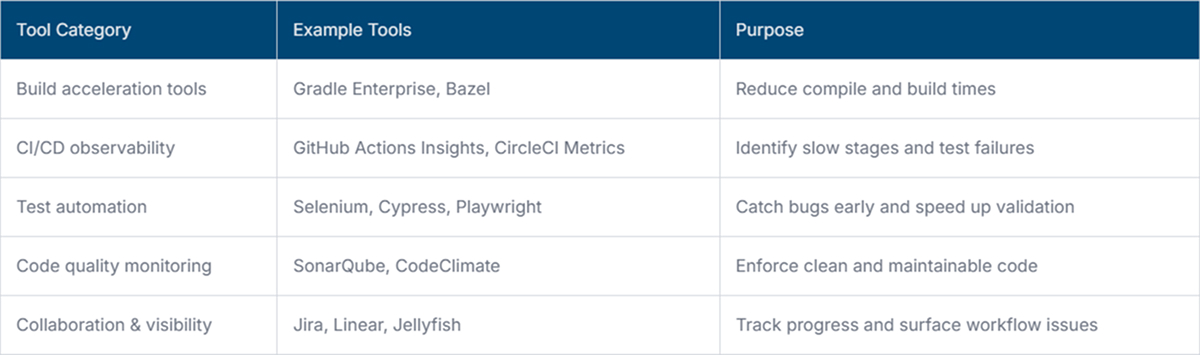
Engineering Productivity Tools that Make a Difference
Implementing DPE doesn’t mean adding more tools. It means using the right tools in smarter ways. Here are some categories that typically drive results:
Measuring Productivity in Engineering
Measuring productivity in engineering isn’t about counting story points or commits. It’s about tracking how efficiently teams move from idea to impact.
- Build success rate: How often builds are completed without errors
- Mean time to feedback (MTTF): The time between pushing code and receiving build/test feedback.
- Deployment frequency: How often new changes reach production.
- Lead time for changes: The time it takes from code commit to live deployment.
- Change failure rate: The percentage of deployments that cause incidents.
Real-world Examples of DPE in Action
- Netflix uses DPE to track the time developers spend waiting and automatically send builds to the quickest resources.
- Google spends a lot of money on inventing tools that speed up building and make tests more reliable. This saves developers hundreds of hours each year.
- Atlassian and Splunk have adopted DPE dashboards that visualize where developers spend their time, leading to more informed process improvements.
Steps to Start Your DPE Journey
Getting started in DPE doesn’t require a massive transformation. Begin small:
- Identify pain points: Determine where the longest delays occur by talking to developers.
- Collect baseline data: Measure build times, test durations, and feedback loops to establish a baseline for future comparison and analysis.
- Select focus areas: Pick one or two metrics to improve first.
- Introduce automation: Make builds faster by automating repetitive stages or by improving caching.
- Review and iterate: Continuously track improvements and share progress with the team.
Conclusion
Developer productivity engineering is a change from making guesses to measuring, improving, and engineering productivity itself. It combines culture, data, and technology into a cycle of continuous improvement.
Organizations can thus create faster feedback, stronger collaboration, and ultimately, better software by committing to the right engineering productivity tools, automating repetitive work, and communicating with developers.