Top 5 Benefits of SCA for Engineering Team Leaders
7 min read• Jan 28, 2026
Written by

Milestone Team

Software today is nothing like it was ten years ago. Even a tiny backend service can depend on hundreds of open-source packages, each with its own version, extra packages, license, and hidden risks. Engineering leaders must move fast while keeping this “software supply chain” safe from attack.
That’s where software composition analysis (SCA) helps. Once a nice extra, SCA is now essential. Whether you run a small startup or several large teams, you need clear visibility, automated scans, and data-driven ways to reduce risk.
Guides from tools such as SonarSource and Cycode show how quickly SCA has matured and why teams rely on it to protect their dependencies.
In this article, we’ll explain SCA in plain language, show why it matters, list five key benefits for engineering leaders, and answer common questions with simple diagrams and tables.
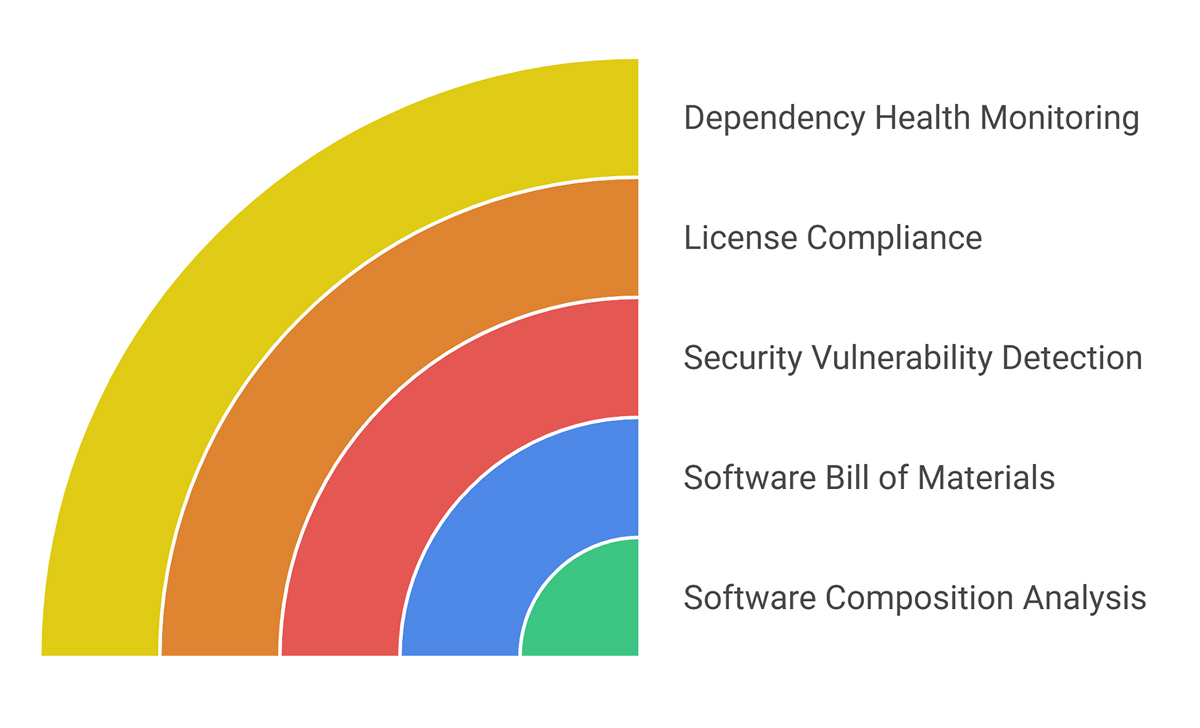
At its core, software composition analysis (SCA) is the practice of scanning, identifying, and managing all open-source components inside your application. It relies heavily on generating a software bill of materials (SBOM), which is an inventory of all external libraries, modules, and dependencies.
Engineering teams use SCA tools to:
Think of SCA as a “dependency MRI scan”. It clearly, consistently, and automatically shows you what’s inside your software. SCAs offer many benefits; here are the top 5:
Most modern applications depend on hundreds of open-source libraries. Any one of those can introduce a critical vulnerability, sometimes deep in a transitive dependency that no one on the team has ever heard of.
SCA tools continuously scan these components and compare them against vulnerability databases (such as NVD or vendor advisories). For every library and version, they check:
Instead of relying on someone in the team to “notice a security blog post,” you get a structured, automated view of risk across all your services. High-severity issues can manifest as tickets, pipeline failures, or alerts, and teams can quickly identify which service and dependency needs attention.
Over time, this changes the organization’s posture. You’re no longer merely reacting to incidents; you’re continuously reducing exposure before code ever reaches production.
Without SCA, many leaders can’t answer a simple question: “What third-party components are we actually shipping?” That’s risky in itself.
SCA solves this with a complete software bill of materials (SBOM), a machine-readable inventory of every external component your applications rely on. An SBOM records the following for each element:
This SBOM is now the main source of information for security, engineering, and compliance. You don’t have to guess if you’re affected when a new CVE is announced. You can just look up the SBOM and see right away where that library is used in microservices, images, or environments.
Visibility also makes it easier to make technical decisions every day. Teams can find groups of legacy packages and services with overly complex dependency trees, and plan upgrades or refactorings based on real data rather than guesswork.
Running SCA manually from time to time creates friction. It works much better when integrated directly with your CI/CD pipelines.
In a standard configuration, every pull request or build in the main branch triggers the SCA step by default. It consists of the following:
From a developer’s perspective, it feels similar to linting or unit tests. If there’s a critical security issue or an unacceptable license issue in the dependency, the build pipeline will fail with clear instructions about what happened and how to fix it.
For engineering executives, there are three key takeaways:
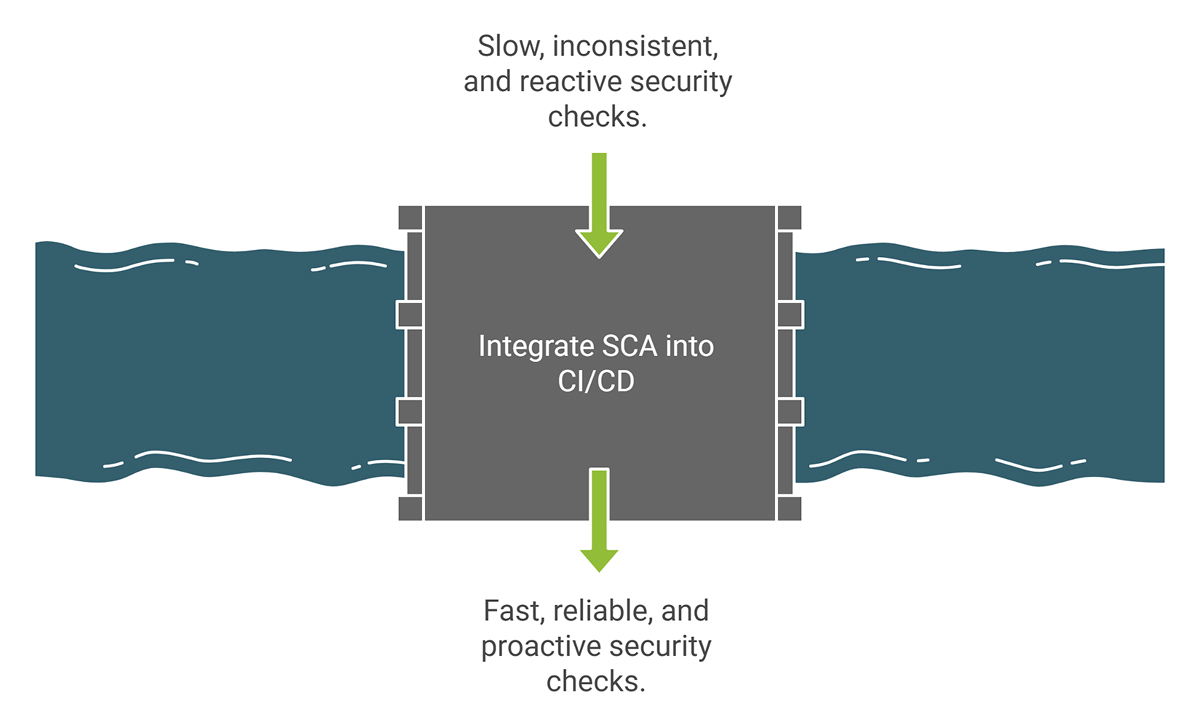
As a result, releases can be forecasted. Rather than having surprises during security reviews, risk mitigation happens in regular development.
Open-source licensing can present problems if you’re not aware of your licensing obligations from the outset. Depending on the licensing conditions, you may be locked into additional obligations, such as disclosing your code, publishing code updates/general modifications, or including specific notices.
With that in mind, SCA tools help manage the above problems by:
Imagine if, for instance, a team accidentally introduced a GPL-licensed component into a proprietary product. Instead of allowing that component to go into production and causing headaches during an audit or due diligence, SCA can identify it early and recommend alternatives to the team.
This helps reduce your organization’s legal risk and makes it easier to collaborate with legal and compliance experts on licensing matters. The SCA process helps ensure that using open-source components in your organization adheres to your organization’s legal compliance policies while also addressing your customers’ needs.
SCA is not just a scanner; it’s also a source of valuable operational data about how your teams manage dependencies and risk.
Most mature SCA platforms expose metrics such as:
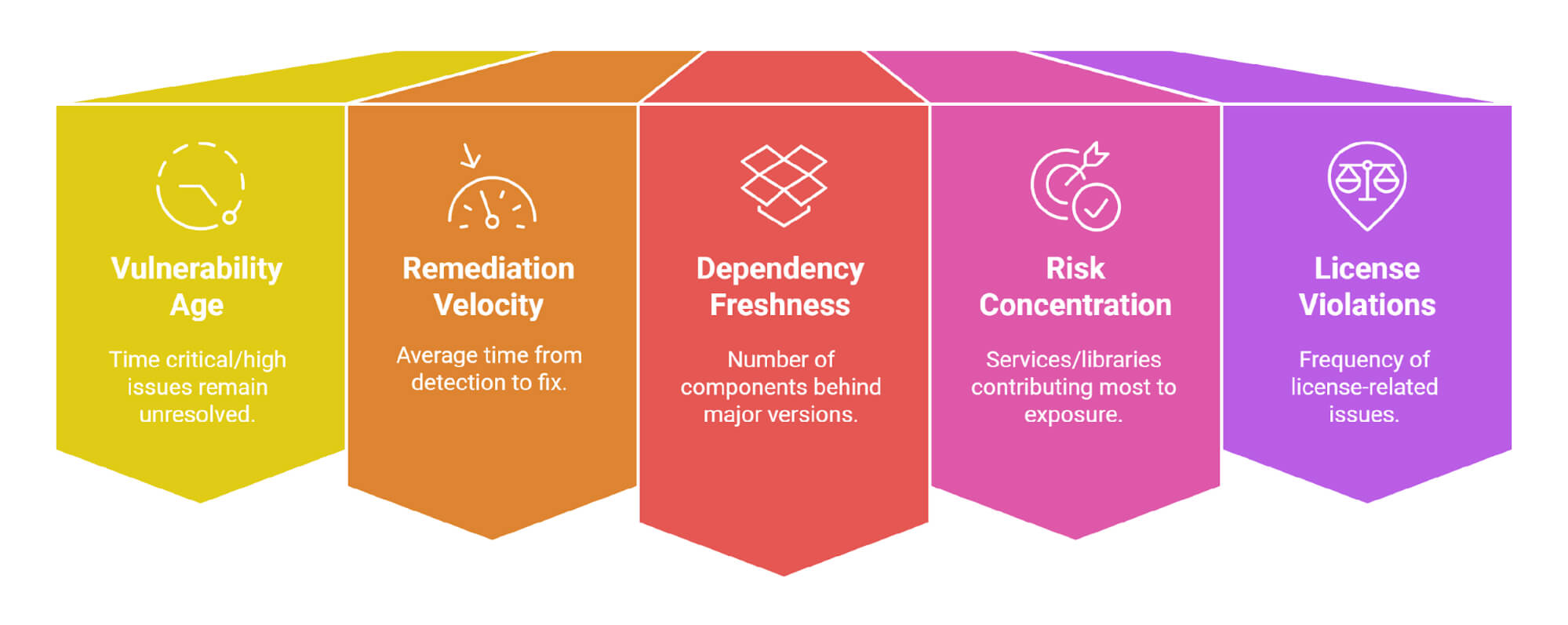
These metrics help leaders move from gut feeling to measurable improvement. You can:
Instead of treating SCA as a one-off security tool, you turn it into a continuous feedback loop that shapes priorities, staffing, and technical strategy.
SCA improves security by automated detection of weaknesses in both direct and transitive dependencies. It guarantees that insecure or unmaintained libraries never hit production. When coupled with automated pipeline policy enforcement, it automatically and significantly shrinks the attack surface for supply chain theft.
Traditional scanners focus on your application code and runtime environment. SCA is concerned with your open-source components. While vulnerability scanners look for misconfigurations or coding mistakes, SCA searches for risks hidden in third-party libraries. They are both needed as they protect different layers.
Proposed metrics include:
These metrics illuminate the level of engineering discipline, code hygiene, and the amount of chronic tech debt.
Integrate SCA as early in the pipeline as is practical, ideally at the PR stage. Set severity thresholds, enable automatic pass/fail, and direct send feedback to the developers. Rareness and documentation are a must for exceptions. Once the groundwork is settled, SCA enforcement becomes frictionless.
Some familiar challenges include:
The usual answer revolves around rules, automation, and communication.
Software composition analysis is no longer an advanced or optional security practice; it’s part of the foundation on which modern engineering relies. Open-source ecosystems move fast. Vulnerabilities surface overnight. License requirements change. Dependencies shift under your feet.
SCA provides engineering leaders with data and the capability to adapt to change.
To recap, SCA empowers teams through:
In many sectors, SCA has emerged as an important element of the secure development lifecycle. The ever-increasing number of attacks in the software supply chain makes SCA one of the most useful tools at the disposal of current leaders. By starting early, automating effectively, and using metrics optimally, your organization establishes secure, scalable engineering in both the current and future eras.
Sign up to our newsletter
By subscribing, you accept our Privacy Policy.