Technical leadership turns the team’s work into steady, high-quality results. In modern software development, where systems change rapidly, effective technical leaders keep everyone on track, align product goals with what the engineers can build, identify risks early, and help the team grow while maintaining high quality.
This article outlines the core principles that every technical leader should know to guide their team in delivering great software, sprint after sprint.
Core Principles of Technical Leadership
Outstanding tech leadership blends product sense, systems thinking, and people care. The principles outlined below form the foundation of the role.
1. Hold a Product-Centric Technical Vision

A technical vision that doesn’t serve the product is just a hobby. Every architectural choice should improve time-to-value, reliability, or iteration speed.
- Start with the user journey: List the happy path and the painful edge cases first, then design the system to support them.
- Make the vision sketchable: If you can’t draw your system on a whiteboard in 2-3 minutes, it’s too complex or too vague.
- Express constraints out loud: “We are optimizing for … at the expense of … until … ” Constraints make trade-offs explicit.
2. Practice Decision Hygiene
People can disagree with your choice, but shouldn’t be surprised by it.
- Capture decisions as ADRs: Keep them short, specific, and dated. Add a review trigger and review date.
- Log alternatives and trade-offs: Record why the top two options lost. This prevents re-litigation.
- Define rollback before rollout: Reversibility lowers risk and speeds delivery.
Architecture Decision Records (ADR) Template (Markdown)
# ADR-004: Adopt gRPC between services
Context:
- Sync REST calls are incurring high JSON encode/decode time.
Decision:
- Use gRPC for inter-service communication.
Alternatives:
- Stick with REST; adopt message bus; evaluate GraphQL federation.
Consequences:
- + Lower latency; strong contracts.
- - New tooling/observability to set up.
Review:
- Trigger: p95 > 300ms OR >2 schema breakages/month
- Date: 2026-01-15
Owner: @tech-lead
3. Create Autonomy with Alignment
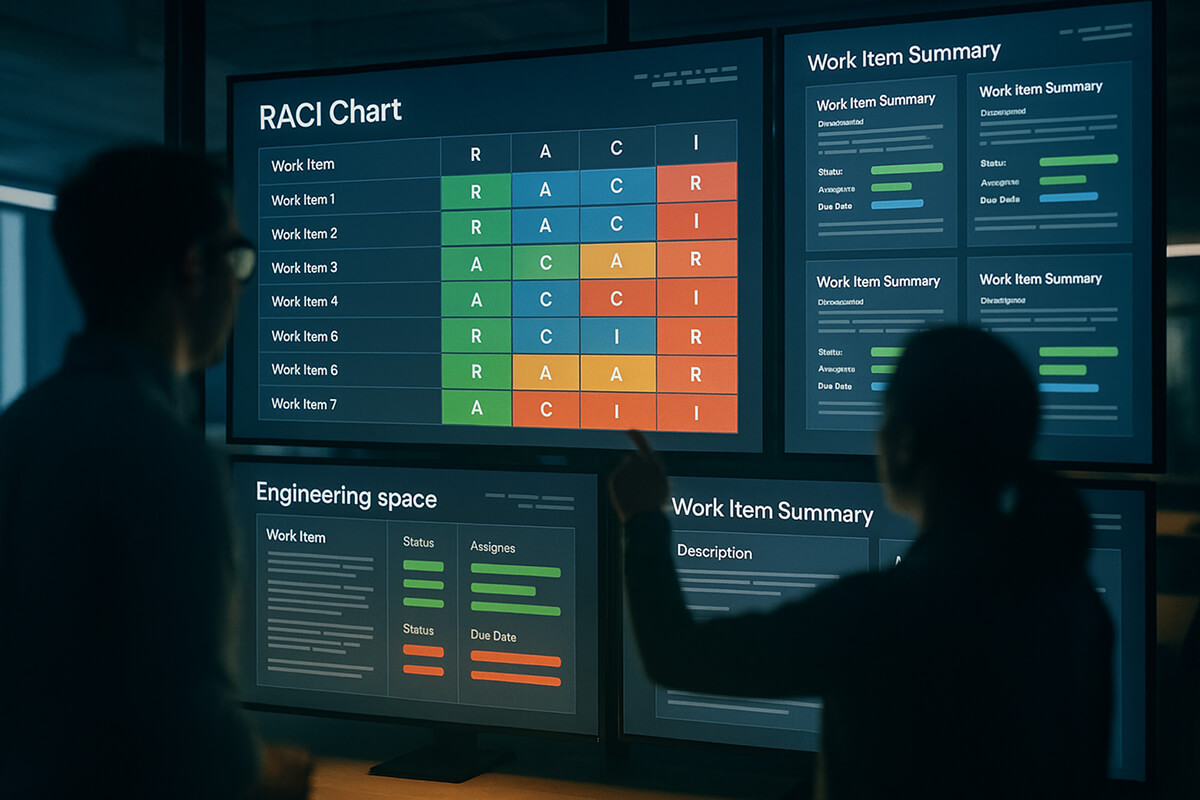
Micromanagement kills throughput, and misalignment kills products. Your job is to set guardrails, not steer every turn.
- Publish how decisions are made: Define a RACI (Responsible-Accountable-Consulted-Informed) matrix for every new initiative before the comment thread balloons.
- Require one-pagers for each work item: Each work item should fit on a single page: objective, scope, risks, metrics, and timeline.
- Run risk-first reviews: Replace status recaps with “what could hurt us next?”
4. Be Decisive Under Incomplete Information
Waiting for “perfect” information stalls progress. Make the call, note your assumptions, and know how to roll back.
- Set a decision window: “Choose by Friday 17:00.” Deadlines keep options from decaying.
- Guard releases with canaries. Ship to 5%, then 25%, then 100%. If your SLOs fail twice in a row, roll back.
- Pick reversible options. Write down how to undo the change and who owns that rollback plan.
5. Coach, Don’t Carry
High-leverage leaders make people better. Mentorship is not a nice-to-have; it is throughput.
- Pair with a purpose: Focus on risky areas and new patterns to transfer judgment.
- Review reasoning before nitpicks: Ask “Why this approach?” more than “Rename this var.”
- Nominate a shadow lead: Each quarter, backstop someone running a project end-to-end.
Table: Mentorship loop
6. Engineer Reliability Like a Product Feature
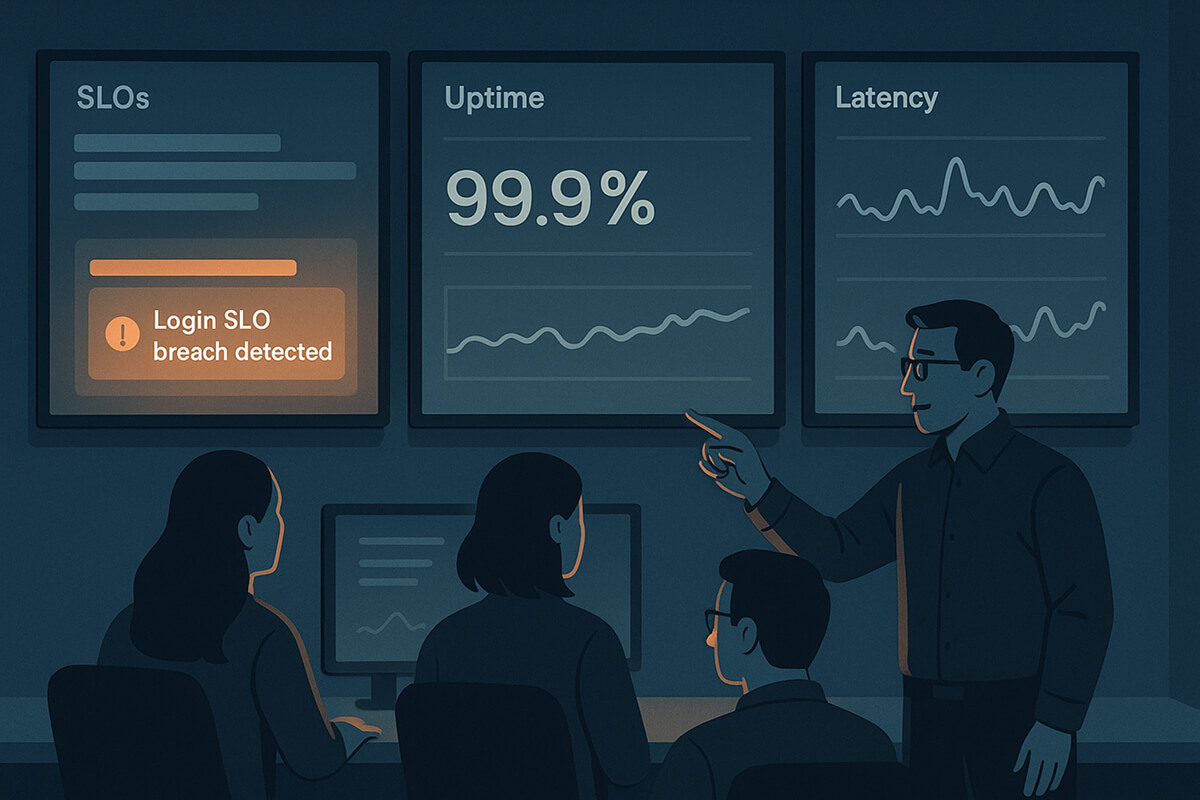
Reliability isn’t a checkbox. It’s part of your product’s reputation.
- Track user-visible SLOs: Translate internal metrics to experience: “Login should succeed in < 2s, 99.9% of the time.”
- Budget reliability work: Allocate 15-20% of capacity to resilience, observability, and incident drills.
- Practice failure: Run regular chaos game days to discover weak spots before your users do.
Simple SLO guard (pseudo-TypeScript)
const SLO_P95_MS = 2000;
if (metrics.p95('login_latency_ms') > SLO_P95_MS) {
  pageOps.openIncident('Login SLO breach');
  featureFlags.disable('heavy_experiments');
}
7. Manage Tech Debt as a Portfolio
Every team has technical debt; healthy teams intentionally pay it down.
- Maintain a debt register: For each item, record impact, cost, owner, and a “clear-by date.”
- Tie debt to incidents: If a debt item triggers or worsens an incident, it escalates in priority.
- Invest in deletion: Removing unused code and services reduces the number of failure points.
8. Operationalize Learning
Teams improve only when they capture and share what they learn.
- Run blameless post-mortems: Focus on the system, not the human. Capture detection time, response time, and prevention plan.
- Hold weekly engineering review: One hour: top incidents, key decisions, plus a 10-minute tech talk so everyone hears fresh ideas.
- Keep a “what changed?” feed: One stream for deploys, feature flags, schema changes, and migrations builds shared context and speeds debugging.
Technical Leadership Qualities to Cultivate
Principles only work when the right person with the right qualities is leading the team.
Adaptability
Change is the only constant: markets shift, infrastructure evolves, and teams undergo constant turnover. Make adaptability a habit to address them.
- Keep two solutions in mind: have a low-risk Plan A and an ambitious Plan B. Switch as data arrives.
- Pre-mortem major changes: Ask “How might this fail?” before you ship. Write down answers.
Emotional Intelligence
You are leading humans, not just systems.
- Tune to the signals: Missed estimates, rising meeting heat, or passive pull-request comments are signals of friction.
- Name the trade-off: “We will miss the refactor again if we chase this feature. Which pain do we prefer?” Clear choices lower tension and build trust.
Strategic Thinking
Leaders zoom out without losing the thread.
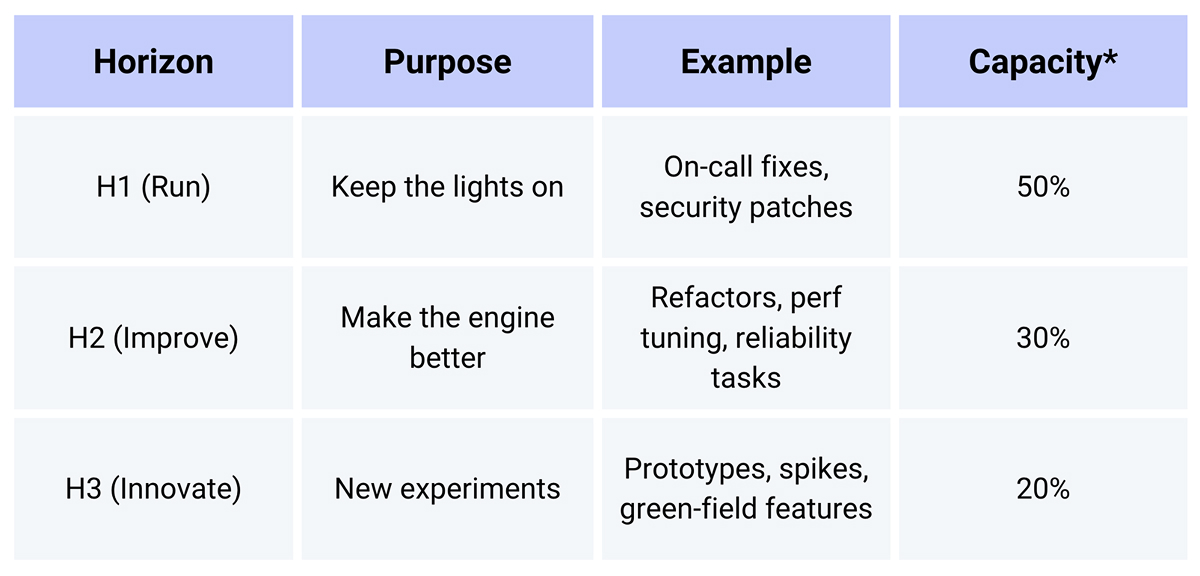
- Use three horizons. Allocate capacity across all three.
- Know your non-goals: Strategy is as much about what you won’t do this quarter.
Startup vs. Enterprise Realities (and how to adjust)
Context shapes the craft. What works in a 15-person startup may not work in a 500-engineer organization.
Startup vs. Mature Organization Patterns
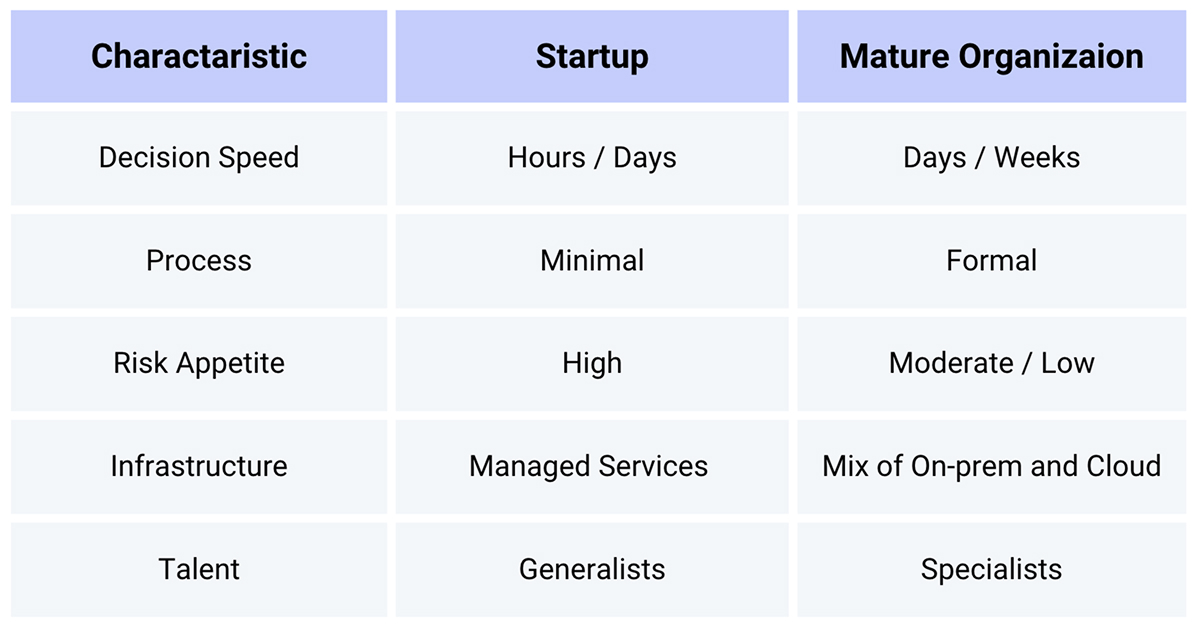
- In startups: Bias to “good enough now.” Utilize managed services, narrow the scope, and ship incremental updates.
- In enterprises: Design for compliance, scale, and change control. Embrace ADRs, guardrails, and automated evidence.
Tooling that Compounds Leadership
Tools don’t replace judgment; they amplify it.
- Observability as a first-class citizen: Traces, logs, metrics with golden dashboards per domain. Tie alerts to SLOs, not CPU.
- Paved roads over heroic sprints: Reusable libraries, CI templates, and scaffolding that make the right path the fast path.
- Documentation you can trust: Docs live next to code, versioned, linted, and verified in CI.
FAQs
1. How does the role of a technical leader differ in startups vs. mature organizations?
In startups, the leader is often a player-coach: they code, decide, and unblock daily. The focus is speed, learning, and runway. In mature organizations, the role leans into coordination and systems, including cross-team architecture, compliance, reliability, and scalability.
You still keep technical credibility, but your leverage is in shaping interfaces, standards, and talent density. See the comparison table above for the common patterns.
2. How can a technical leader balance hands-on coding with leadership duties?
Use maker blocks and manager blocks. Reserve two or three maker blocks (2-3 hours each) weekly for heads-down coding on high-impact, low-coordination tasks. Use manager blocks for one-on-ones, reviews, and strategy sessions.
If you can’t protect maker time, code on the critical path during incidents or spikes to stay sharp, but don’t become the bottleneck. Your code should be unblocked, not centralized.
3. How should a technical leader handle conflicts between engineering ideals and product deadlines?
Make the trade-off explicit and time-bound. Offer two plans:
- Plan A: Ship now, incur specified debt, commit to a follow-up window with a debt ticket and owner.
- Plan B: Delay the feature by N days to build the foundation.
State the consequences of each plan and let the product choose with you. If the debt item reappears in incidents or misses two scheduled windows, escalate and rebalance the roadmap capacity. Publishing the ADR helps align future choices.
4. What training or habits help an aspiring engineer transition into technical leadership?
- Run small projects end-to-end: Own a thin slice from design to deploy-practice trade-offs.
- Write one ADR per month: Decision hygiene is leadership hygiene.
- Mentor one person: Teaching clarifies your thinking and scales your impact.
- Read real post-mortems: You’ll learn how complex systems fail and how calm leaders respond.
Conclusion
Effective technology leadership blends judgment, communication, and care. The principles discussed here-clear vision, transparent decisions, aligned autonomy, reliable systems, and operational learning-create an environment where engineers do their best work and customers feel the difference. Start small: pick one principle, one ritual, one table, one ADR. Ship it. Then make it better.